COMMUNAL LIVING
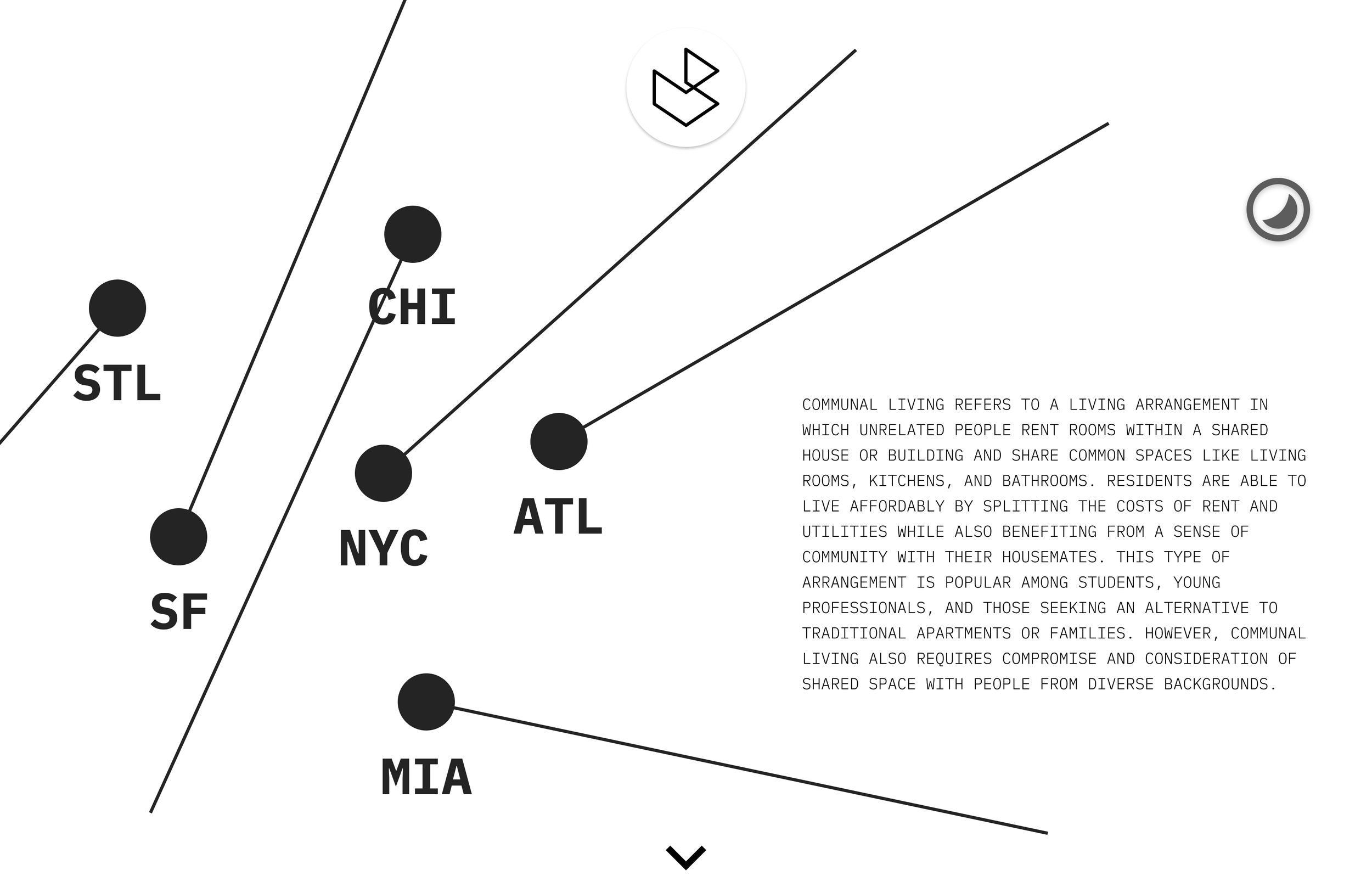
The unaffordable price of renting in many US cities, the difficulty of finding reliable rentals and roommates to share the cost, and the amount of space demanded by the residential sector around the world have made it necessary to look for alternatives. Communal Living is a platform dedicated to manage shared spaces for renting, form landlords and tenant perspectives, which aims to make viable the idea of long term communal living among unrelated people.
-
Communal Living involves sharing common areas of a home like living rooms, kitchens, bathrooms, laundry rooms, etc. Residents need to coordinate use of these spaces and share responsibilities for chores and maintenance.
-
By splitting costs among multiple people, communal living is often more affordable than renting an apartment alone or with just one or two roommates. Rent and utility bills are divided among more people, allowing each person to pay less.
-
Living with a group of people in close quarters can foster a sense of community and connection. Housemates have the opportunity to socialize and bond over shared interests and experiences under one roof. However, it also requires navigating different personalities, schedules and lifestyles.
-
Communal living requires a lot of compromise as residents must coordinate on things like shared space use, chores, guests, noise, schedule and more. Navigating different needs and finding solutions that work for everyone can be challenging and often requires open communication and flexibility.
-
A communal living arrangement typically involves people from diverse backgrounds, ages, cultures, and lifestyles, all sharing one space. While this can lead to an interesting mix of perspectives and experiences, it also requires sensitivity, respect and inclusiveness.